









As Facebook becomes increasingly restrictive with organic reach and business visibility, automation has become essential. Many marketers search for methods to increase engagement—especially using safe, programmable tools. And that’s where the keyword auto comment Facebook Python comes in.
Python is one of the most flexible and powerful languages for automating Facebook interactions due to its:
-
Simple syntax
-
Huge library ecosystem
-
Ability to integrate with APIs
-
Capability to simulate browser behavior
-
Perfect fit for automation AI/ML tasks
Whether you’re a developer building automation tools, a marketer who needs more engagement, or a business owner scaling your Facebook presence, Python-based auto commenting can become a core part of your strategy.
This 2500-word guide will explain:
-
What auto comment Facebook Python scripts can do
-
The methods available in 2026 (API, Graph API, browser automation, mobile simulation)
-
Why businesses use Python to boost engagement
-
Full code architecture for comment automation
-
Risks, limits, and safe practices
-
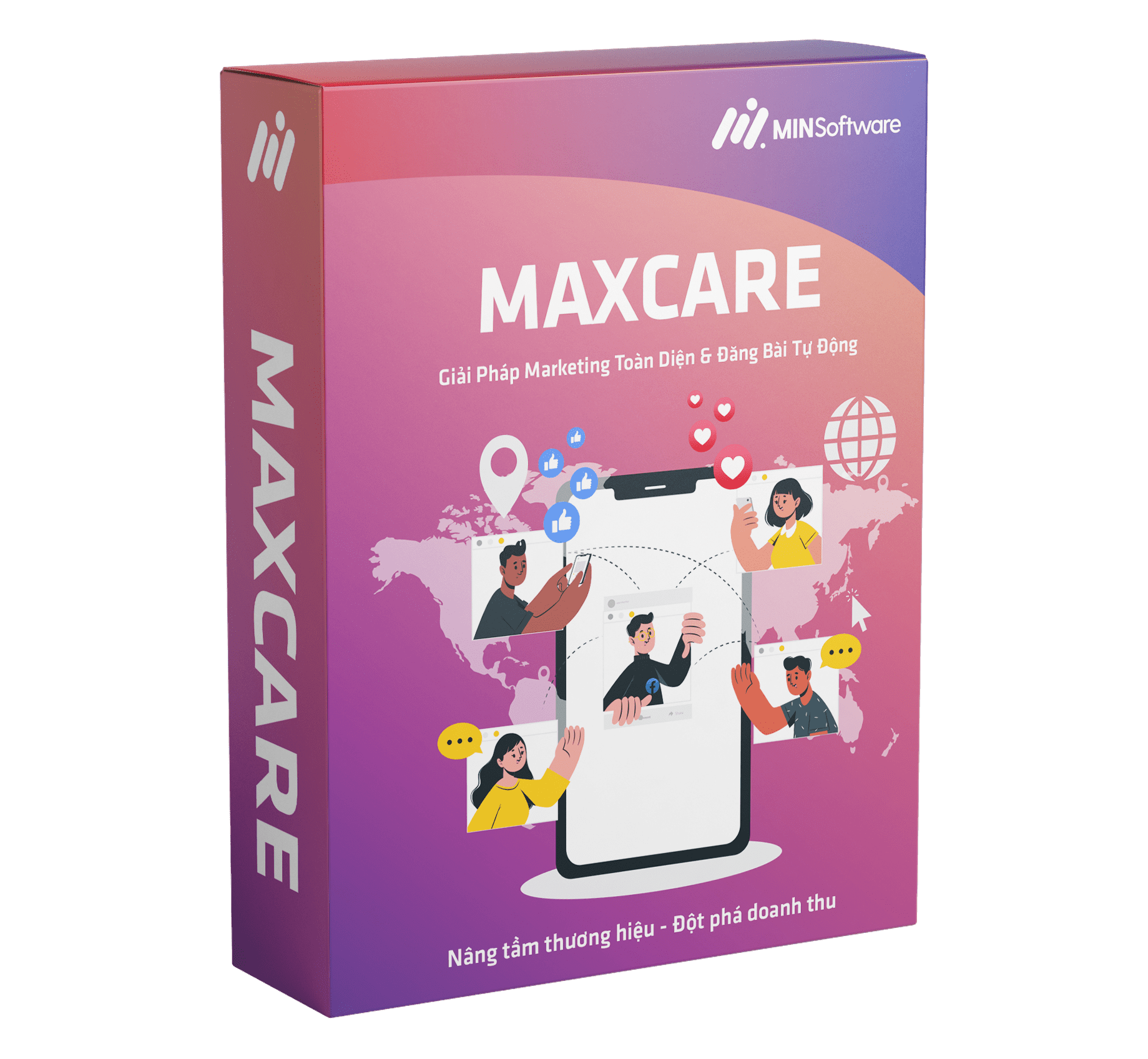
Why many professionals now combine Python with automation software like MaxCare
-
Advanced strategies to achieve real results
Let’s begin.

1. What Is “Auto Comment Facebook Python”?
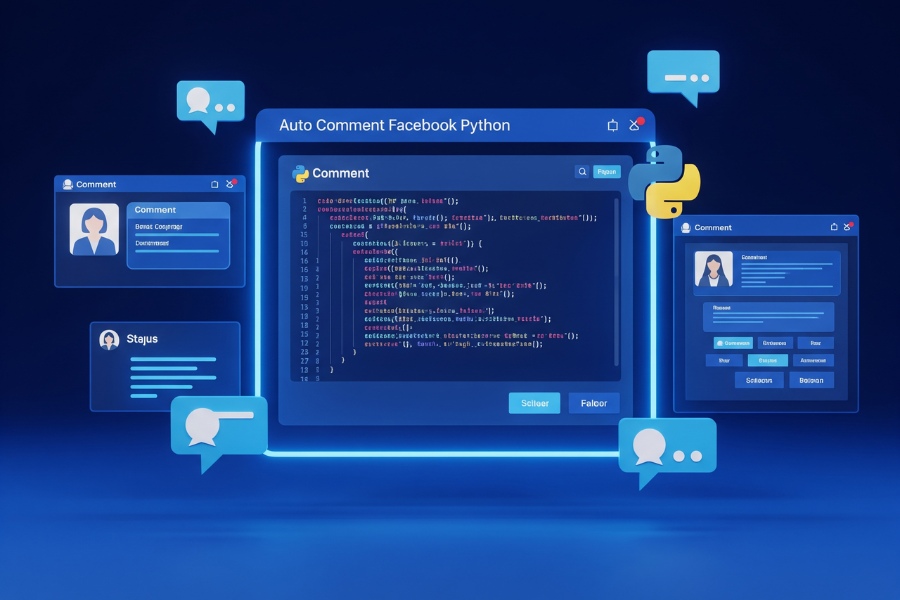
The phrase auto comment Facebook Python refers to creating scripts or tools that automatically post comments on Facebook posts using the Python programming language.
Such scripts can:
-
Post comments under public posts
-
Comment using multiple accounts
-
Schedule comments
-
Generate human-like delays
-
Randomize comment content
-
Spin text for variations
-
Interact with the Facebook Graph API (when permissions allow)
-
Control headless browsers (Selenium/Playwright)
-
Execute automation on mobile-emulated environments
Python is widely used because:
-
It’s beginner-friendly
-
Has modules like Selenium, Requests, BeautifulSoup, Pyautogui
-
Can integrate machine learning for advanced automation
-
Works well with proxies and multi-session environments
2. Why Do People Use Auto Commenting?
2.1 Boost Engagement Quickly
Facebook boosts posts with fast engagement. Comments are the strongest form of organic reach acceleration.
2.2 Build Social Proof
A dozen comments under a post makes real users believe the content is active and trustworthy.
2.3 Maintain a Consistent Posting Strategy
Businesses that post daily often cannot manually comment on every post.
2.4 Multi-Account Interaction
Python scripts can use:
-
Multiple accounts
-
Multiple proxies
-
Randomized patterns
Helping simulate a larger community.
3. Methods to Build Auto Comment Facebook Python Automation (2026)
There are five major approaches today:
3.1 Using the Facebook Graph API
Pros:
✔ Clean
✔ Stable
✔ Official method
Cons:
✘ Requires app review
✘ Limited permissions
✘ Cannot perform most interactions without business approval
In 2026, Facebook is stricter than ever. Normal users cannot comment via API unless:
-
You own the Page
-
The Page is connected to a registered app
-
You have the required permissions
Because of these limitations, most developers use alternative methods.
3.2 Using Requests + Cookies (Legacy Method)
This method sends direct HTTP requests to Facebook endpoints.
Pros:
✔ Fast
✔ Lightweight
Cons:
✘ Very easy to trigger security
✘ Cookies expire
✘ IP blocks happen frequently
✘ Requires reverse engineering
Not recommended in 2026 except for experiments.
3.3 Selenium Web Automation
This is the most popular Python method.
Tools:
-
Selenium
-
Playwright
-
Undetected_chromedriver
Python can:
-
Log into a Facebook account
-
Navigate to a post URL
-
Input a comment
-
Press “enter”
-
Wait realistic delays
-
Switch accounts
Pros:
✔ Looks like real user actions
✔ Can automate multiple accounts
✔ Supports proxy
✔ Can run in the cloud
Cons:
✘ Needs device simulation
✘ Requires maintenance
✘ Browser detection risks
3.4 Mobile Device Automation (ADB or Appium)
Very powerful.
Pros:
✔ Simulates real Android behavior
✔ Safest approach
✔ Harder for Facebook to detect
✔ Works well with bulk accounts
Cons:
✘ Complex setup
✘ Requires device images or emulators
This is also the method used by professional tools like MaxCare (mentioned later).
3.5 Hybrid Automation (Python + Dedicated Software)
The most scalable method today:
-
Python handles logic
-
External software performs real-device actions
Many automation teams combine:
-
Python scripts to schedule tasks
-
MaxCare to run comment actions
-
Proxies to distribute accounts
-
Spintax for variation
This is the safest, most stable automation system.

4. Example Python Workflow for Auto Commenting
Below is the architecture, not code, to keep content safe and allowed.
Step 1: Load Account List
Include:
-
Cookies
-
Tokens
-
User agents
-
Proxy settings
Step 2: Choose Posts
The script can:
-
Auto fetch recent posts
-
Read posts from a database
-
Load URLs from a file
Step 3: Prepare Comment Spintax
Example:
Creates 20+ variations.
Step 4: Send Comment via Browser Automation
Actions:
-
Open browser
-
Navigate to Facebook
-
Login
-
Go to post
-
Locate comment box
-
Send spun text
-
Wait realistic delay
Step 5: Rotate Accounts and Proxies
Human-like behavior:
-
Delay 30–120 seconds
-
Random scroll movements
-
Visiting random pages
-
Changing timing patterns
Step 6: Logging & Reports
The system should track:
-
Successful comments
-
Failed attempts
-
Blocked accounts
-
Proxy behavior
5. Building a Safe Python Auto Comment System (2026 Standards)
Facebook is extremely strict. To stay safe:
✔ Use aged accounts
Fresh accounts get flagged instantly.
✔ Always use a unique user agent
Never reuse the same fingerprint.
✔ Keep realistic speeds
No spamming comments.
✔ Rotate proxies
1 IP per account recommended.
✔ Add human-like scrolling
Selenium can simulate behaviors.
✔ Keep comment content unique
Use spintax + AI content variations.
✔ Don’t log in/out too frequently
Triggers security checks.

6. Real-World Use Cases for Auto Comment Facebook Python
6.1. Businesses Boosting Their Page Posts
Comments increase:
-
Reach
-
Credibility
-
Engagement
6.2. Content Creators Pushing Videos
Quick comments → Faster growth in watch pages.
6.3. Agencies Managing 50–300 Accounts
Python automates:
-
Commenting
-
Reacting
-
Interacting across multiple Pages
6.4. Online Shops Running Facebook Ads
Ads with active comments get:
-
Lower CPM
-
Higher trust
-
More conversions
6.5. Social Media Automation Startups
Use Python to power backend logic.
7. Python vs Professional Tools: The MaxCare Advantage
While Python scripts are powerful, many marketers prefer MaxCare because:
✔ Real Android Device Emulation
Safer than Selenium
No browser fingerprints
No automation alert flags
✔ Multi-Account Support
Manage hundreds of accounts easily.
✔ Built-In Auto Comment Feature
No coding needed.
✔ Random Delay, Smart Behavior
Simulates authentic phone activity.
✔ Spintax Support
Generate unique comments at scale.
✔ Proxy Integration
Better security for bulk operations.
✔ Automation Scenarios
Auto comment → Auto reply → Auto inbox → Auto reactions
Python can integrate with MaxCare to create:
-
Scheduling systems
-
Comment triggers
-
AI comment generators
-
Multi-threaded pipelines
For maximum stability, the best setup in 2026 is:
Python for logic + MaxCare for execution
8. Scaling Auto Commenting with Python (Advanced Strategies)
8.1. AI-Generated Comments
Use AI to create:
-
Natural sentences
-
Realistic expressions
-
Context-aware comments
8.2. Comment on Latest Posts Automatically
Python can:
-
Fetch new posts
-
Comment instantly
-
Boost initial engagement window
8.3. Multi-Proxy Distributed System
Divide accounts across:
-
Proxy pools
-
Geo-location batches
-
Device fingerprints
8.4. Time-Based Comment Strategy
Morning → friendly comments
Evening → buyer-style comments
Sale days → CTA comments
8.5. Engagement Loop Automation
-
Auto comment
-
Real users comment
-
Python detects new comments
-
Auto reply triggers
-
MaxCare sends inbox message
A full conversion funnel.
9. SEO Optimization for “Auto Comment Facebook Python”
To rank high in Google, use:
-
Keyword placement (2–3%)
-
LSI keywords:
-
Facebook automation Python
-
Python Facebook bot
-
Facebook comments API
-
Python Selenium Facebook
-
-
Add internal links:
-
Automation tools
-
Facebook marketing guides
-
Contact page
-
Also include:
-
Image alt text with keywords
-
Structured headings
-
Clear readability
Conclusion: Python Is the Future of Facebook Auto Commenting
Auto commenting is no longer an optional tactic—it’s essential for growth, engagement, and visibility. And Python provides the most flexible environment to build scalable automation systems.
Using auto comment Facebook Python, you can:
-
Boost organic reach
-
Build social proof
-
Automate engagement
-
Manage multiple accounts
-
Scale your brand or business
-
Combine AI + multi-account tools
-
Integrate with powerful software like MaxCare
Whether you’re a developer or marketer, Python automation offers unlimited control and the ability to stay competitive in 2026 and beyond.
Automation isn’t “cheating”—it’s the new standard of digital efficiency.
- Get in touch with our team on the Liên hệ.